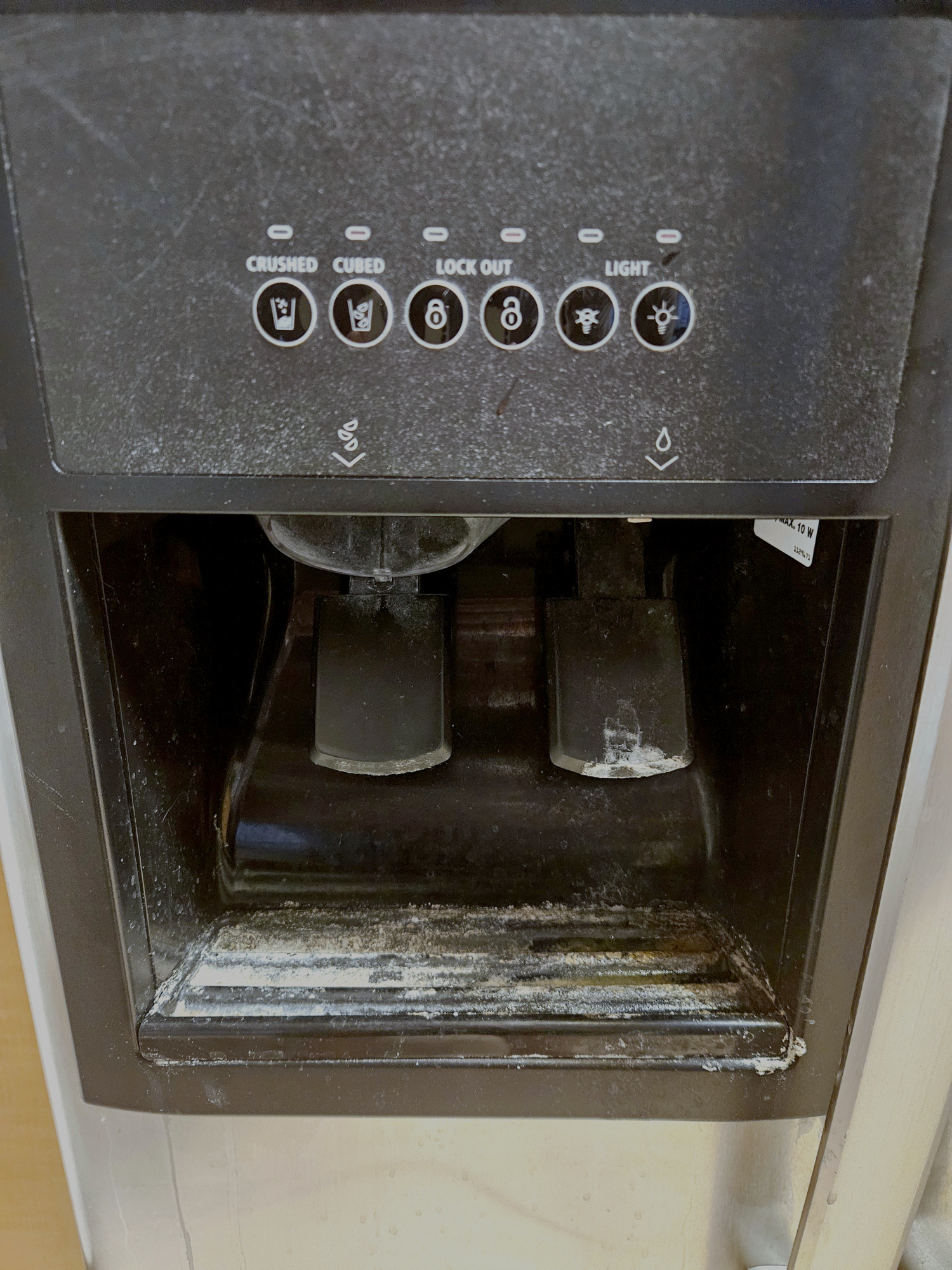
Take a closer look at your appliances for a moment.
Look at your refrigerator water dispenser. Check around the ice maker. Notice the area where water drips, sprays, or collects. What do you see?
For many homeowners, the answer is familiar: cloudy buildup, white spots, chalky residue, or stubborn deposits that seem to return no matter how often they are wiped away. At first glance, these marks may look like nothing more than a cleaning issue. But in many cases, they are actually clues about what is moving through your home’s water supply every day.
Those white spots and cloudy deposits are often caused by minerals, sediment, and other impurities in the water. When water evaporates, it can leave these substances behind on surfaces. Over time, that buildup becomes visible around faucets, refrigerator dispensers, coffee makers, shower doors, sinks, and other areas where water is used regularly.
While the residue may be easy to ignore at first, it can point to a larger issue: your water is interacting with far more than just your drinking glass.
Your Water Touches More Than You Think
When people think about water quality, they often think only about the water they drink. Clean, better-tasting drinking water is important, but it is only one part of the bigger picture.
Your home’s water is used throughout the entire house. It flows through your refrigerator, dishwasher, washing machine, water heater, faucets, showers, toilets, and plumbing. It touches the surfaces you clean, the clothes you wash, the food you prepare, and the appliances you rely on every day.
That means water quality is not just about taste. It is also about performance, efficiency, maintenance, and long-term protection for your home.
If mineral buildup is visible around your refrigerator dispenser, there is a good chance similar buildup may be occurring in places you cannot easily see, including inside appliance components, water lines, valves, fixtures, and plumbing connections.
Why White Spots and Cloudy Buildup Matter
Cloudy residue and white spots are commonly associated with minerals in water. These minerals can accumulate gradually, especially in areas where water sits, heats, cools, or evaporates. Over time, these deposits may become harder to remove and more noticeable on surfaces.
Around a refrigerator dispenser, buildup can collect near the nozzle, tray, or surrounding plastic and metal surfaces. In an ice maker, minerals and sediment can affect clarity, taste, and overall water flow. In other appliances, buildup may contribute to reduced performance or more frequent maintenance needs.
What begins as a small cosmetic concern can become a sign that your appliances are working harder than they should.
The Hidden Impact on Appliances
Your refrigerator is one of the most-used appliances in your home, and the water system inside it depends on consistent flow and clean filtration. When sediment, minerals, and other contaminants move through that system, they can leave deposits behind.
Over time, buildup can affect water flow, reduce efficiency, and place unnecessary strain on parts. Filters may need to work harder. Dispensers may become harder to keep clean. Ice makers may not perform as well as expected. In some cases, long-term buildup may even contribute to shorter appliance lifespan.
And refrigerators are only one example.
Dishwashers may develop residue on dishes and glassware. Washing machines may leave fabrics feeling less fresh. Water heaters may collect sediment. Faucets and showerheads may lose pressure as deposits accumulate. When water quality issues are present, the effects can show up throughout the home in small but frustrating ways.
It Is Not Just About Appearance
It is easy to dismiss water spots as a normal part of home maintenance. After all, most homeowners are used to wiping down sinks, polishing faucets, and cleaning around dispensers.
But when buildup keeps returning quickly, it may be worth asking a deeper question: what is in the water that is leaving this behind?
Water that contains excess minerals, sediment, chlorine taste or odor, or other unwanted substances can affect the way your home feels and functions. It can change the taste of drinking water, the look of ice, the cleanliness of dishes, and the condition of appliances over time.
That is why more families are starting to think beyond basic cleaning and take a closer look at their water quality as a whole-home issue.
Small Signs Can Point to a Bigger Pattern
One of the easiest ways to understand your water quality is to pay attention to what your water leaves behind.
Look for signs such as:
White or chalky spots around faucets and dispensers
Cloudy buildup on refrigerator trays or shower doors
Residue on dishes or glassware after washing
Reduced water flow from fixtures or appliance dispensers
Unpleasant taste or odor in drinking water or ice
Sediment or particles appearing in water
These everyday signs may seem minor on their own, but together they can indicate that your home’s water could benefit from better filtration.
Why Filtration Matters
A quality filtration system helps reduce unwanted particles and contaminants before they reach the places where your water is used. Depending on the system, filtration can help improve taste, reduce sediment, support appliance performance, and protect plumbing and fixtures from unnecessary buildup.
For some families, a refrigerator filter may be the first step. These filters are designed to improve the water and ice coming directly from the refrigerator, helping provide cleaner, better-tasting water for daily use.
For others, the issue may extend beyond one appliance. When signs of buildup appear throughout the home, a whole house filtration system may be a better solution. Whole house systems are designed to filter water as it enters the home, helping address water quality at a broader level before it reaches appliances, fixtures, and faucets.
The right solution depends on your home, your water, and your goals.
Protecting Your Home Starts With Awareness
Many homeowners do not think about water quality until there is a noticeable problem. But the signs often appear long before major issues develop.
That cloudy buildup around your refrigerator dispenser may be easy to overlook. Those white spots on your fixtures may seem like a normal inconvenience. The residue on glassware may feel like just another cleaning task.
But these signs can also serve as helpful reminders that water quality affects your home every single day.
By paying attention to what your water leaves behind, you can take proactive steps to protect your appliances, improve your everyday water experience, and reduce the impact of contaminants throughout your home.
Aquamor Filtration Solutions for Everyday Water Quality
At Aquamor, we design filtration solutions that help families address the everyday signs of water quality concerns. From refrigerator filters that support cleaner drinking water and ice to whole house filtration systems that help protect appliances, fixtures, and plumbing, our products are built with the needs of modern homes in mind.
Water quality is not just about what you drink. It is about everything your water touches.
Your refrigerator. Your dishwasher. Your washing machine. Your water heater. Your faucets. Your showers. Your home.
When your appliances start showing signs of buildup, they may be telling you something important. And taking action early can help you create a cleaner, more efficient, and better-protected home environment.
Look at What Your Water Leaves Behind
The next time you notice cloudy buildup, white spots, or residue around your appliances, do not just wipe it away and forget about it. Take it as a sign to look closer.
Your water may be leaving behind more than you realize.
And sometimes, the easiest way to understand your water quality is simply by looking at what it leaves behind.