Choosing a water filter can feel confusing. Many systems promise cleaner, better-tasting water, but not every claim means the same thing. That is why third-party testing and certification matter.
NSF develops standards used to evaluate drinking water treatment systems, including filtration products for point-of-use, point-of-entry, and membrane-based applications. These standards help consumers, retailers, and commercial buyers understand what a product has been tested to do, rather than relying only on broad marketing claims. NSF explains that NSF/ANSI 42, 53, and 401 are among the most common filtration standards for drinking water products.
For homeowners, foodservice operators, retailers, distributors, and commercial businesses, understanding these certifications can make it easier to choose the right filtration solution for the right application.
Why NSF Certification Matters
NSF certification helps verify that a filtration product has been evaluated against a specific performance standard. Depending on the standard and product claim, testing may involve contaminant reduction, material safety, structural integrity, and performance requirements.
In simple terms, certification helps answer an important question: does this filter actually do what it says it does?
This matters because water filtration needs vary widely. A filter designed to improve taste and odor is not automatically the same as a system tested for health-related contaminant reduction. A refrigerator filter, reverse osmosis system, whole-house system, and commercial foodservice cartridge may each serve a different purpose.
Common NSF Water Filter Standards
Different NSF standards apply to different filtration goals. Here are several of the most common standards consumers and businesses may see when comparing systems.
NSF/ANSI 42: Taste, Odor, and Aesthetic Effects
NSF/ANSI 42 applies to aesthetic water quality concerns. These are issues that affect how water tastes, smells, or looks rather than specific health-related contaminant risks.
According to NSF, claims under Standard 42 may include chlorine, taste and odor, chloramine, particulate, iron, manganese, zinc, and total dissolved solids, depending on the product and its certified claims. For many households and businesses, this is the standard most closely tied to better-tasting water.
NSF/ANSI 53: Health-Related Contaminants
NSF/ANSI 53 applies to systems designed to reduce specific health-related contaminants. NSF notes that this standard includes more than 50 possible contaminant reduction claims, including claims related to lead, Cryptosporidium, VOCs, and chromium.
This is especially important because customers are increasingly asking not only whether water tastes better, but also what a filter is tested to reduce.
NSF/ANSI 58: Reverse Osmosis Systems
NSF/ANSI 58 applies to reverse osmosis systems. Reverse osmosis, often called RO, is commonly used when a higher level of contaminant reduction is needed for drinking water.
RO systems are commonly used in under-sink drinking water applications, commercial systems, and advanced point-of-use filtration setups. When comparing RO systems, buyers should review the product’s certification details, performance data sheet, flow rate, capacity, and replacement requirements.
NSF/ANSI 401: Emerging Compounds
NSF/ANSI 401 addresses certain emerging compounds and incidental contaminants that may be found in drinking water at trace levels. NSF states that Standard 401 is used for claims involving contaminants such as some prescription drugs, over-the-counter medications, herbicides, pesticides, and chemical compounds.
This standard is especially relevant as customers become more aware of water quality issues beyond taste and odor.
PFAS and the Growing Focus on Verified Claims
PFAS are one reason more people are paying attention to filtration standards. In 2024, the U.S. Environmental Protection Agency finalized the first national drinking water regulation for certain PFAS in public drinking water systems. EPA states that the rule is intended to reduce PFAS exposure in drinking water for approximately 100 million people.
NSF also notes that water filters certified to NSF/ANSI 53 or NSF/ANSI 58 with a PFAS designation can help reduce PFAS, and that NSF/ANSI Standards 53 and 58 were updated to address PFAS reduction claims beyond PFOA and PFOS. NSF’s consumer FAQ explains the role of NSF/ANSI 53 and 58 for PFAS-related filter claims, while NSF’s PFAS standards overview discusses updates to filtration standards.
For consumers and businesses, the key takeaway is simple: water quality expectations are changing. As awareness grows, customers are more likely to ask whether filtration systems are supported by credible testing, performance data, and clearly stated reduction claims.
That does not mean every business needs the same type of system. A refrigerator filter, a whole-house filter, an under-sink RO system, and a commercial foodservice filtration system may all serve different purposes. The right choice depends on the water issue, application, flow requirements, equipment needs, and certification goals.
How Aquamor Supports Water Filtration Needs
Aquamor focuses on practical water filtration solutions for residential, retail, and commercial applications. Our goal is to help make high-quality water simple, reliable, and scalable across real-world use cases.
For retail and private-label partners, Aquamor offers retail water filtration solutions designed to support retailers, distributors, and OEM programs. This includes replacement refrigerator water filters and filtration products built for customers who want reliable, affordable access to better water at home.
For restaurants, cafés, coffee shops, quick-service restaurants, and commercial equipment applications, Aquamor offers foodservice water treatment solutions engineered for demanding commercial environments. These systems can help support beverage consistency, equipment performance, and scale management depending on the water conditions and system selected.
For operators comparing specifications, Aquamor’s foodservice product resources provide model-level information such as filtration claims, flow rates, replacement options, and system compatibility.
What to Look for Before Choosing a Filter
Before buying or specifying a filtration system, look beyond broad marketing claims. A strong evaluation should include:
- The specific water problem being addressed
- The type of system needed, such as refrigerator, under-sink, whole-house, RO, UF, or commercial filtration
- The applicable NSF/ANSI standard or third-party certification
- The product’s performance data sheet
- Flow rate and capacity
- Replacement filter schedule
- Compatibility with the appliance, equipment, or installation environment
A filter certified for taste and odor improvement is not automatically certified for health-related contaminant reduction. Likewise, a reverse osmosis system should be evaluated differently from a carbon block refrigerator filter or a commercial scale-control cartridge.
Better Water Starts With the Right Fit
Water filtration is not about choosing the most complicated system. It is about choosing the right system for the job.
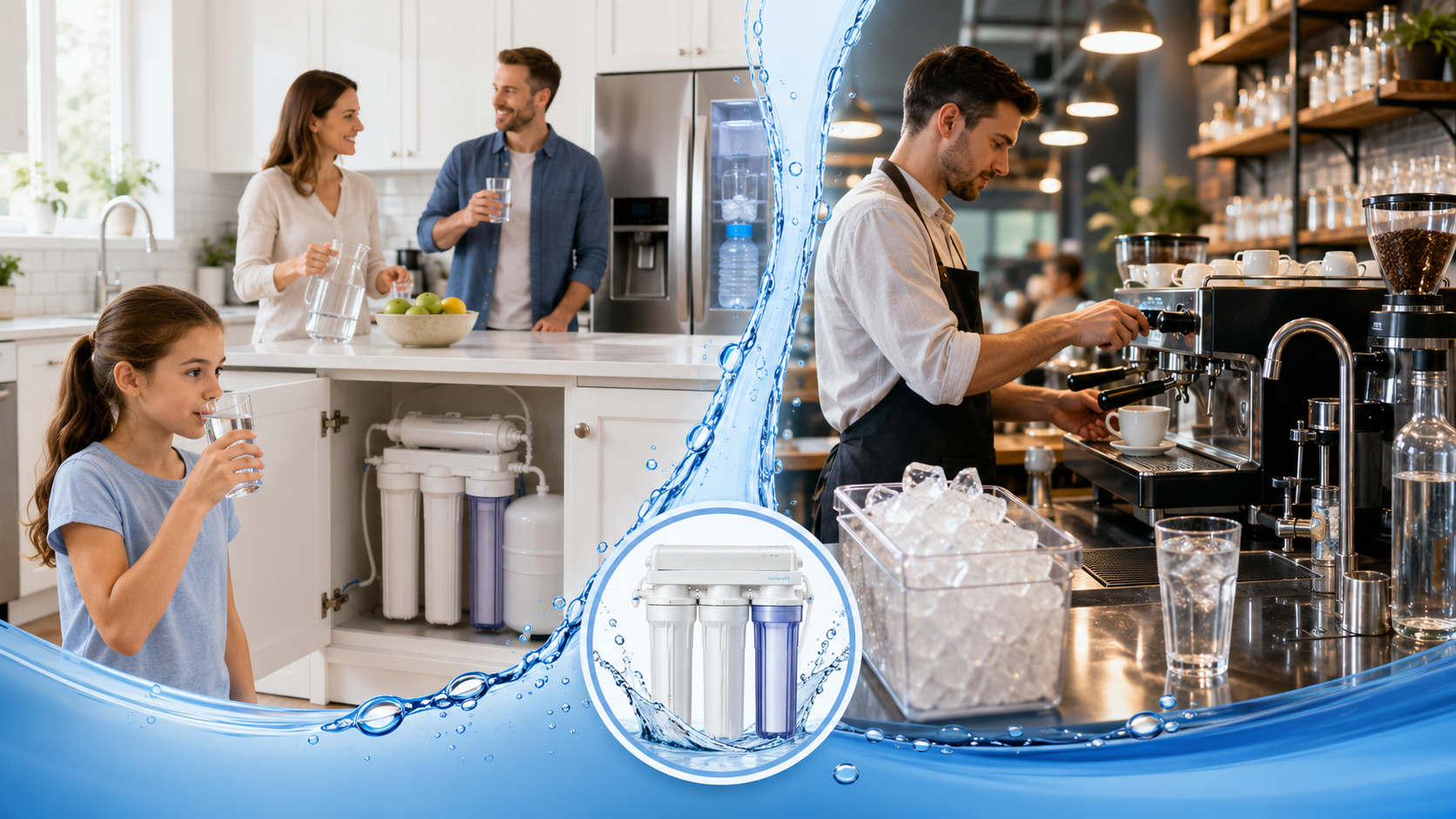
For a homeowner, that may mean a refrigerator water filter replacement or under-sink drinking water system. For a restaurant or coffee shop, it may mean a commercial filtration setup designed to support beverage quality and protect equipment. For a retailer, distributor, or OEM partner, it may mean scalable filtration products that meet customer expectations for quality, performance, and value.
As standards, customer expectations, and water quality concerns continue to evolve, verified claims and thoughtful product selection will matter more than ever.
Clean, reliable water starts with understanding what your filter is built to do — and choosing a solution designed for the way your water is actually used.
To explore solutions by application, visit Aquamor’s Retail and Foodservice pages.