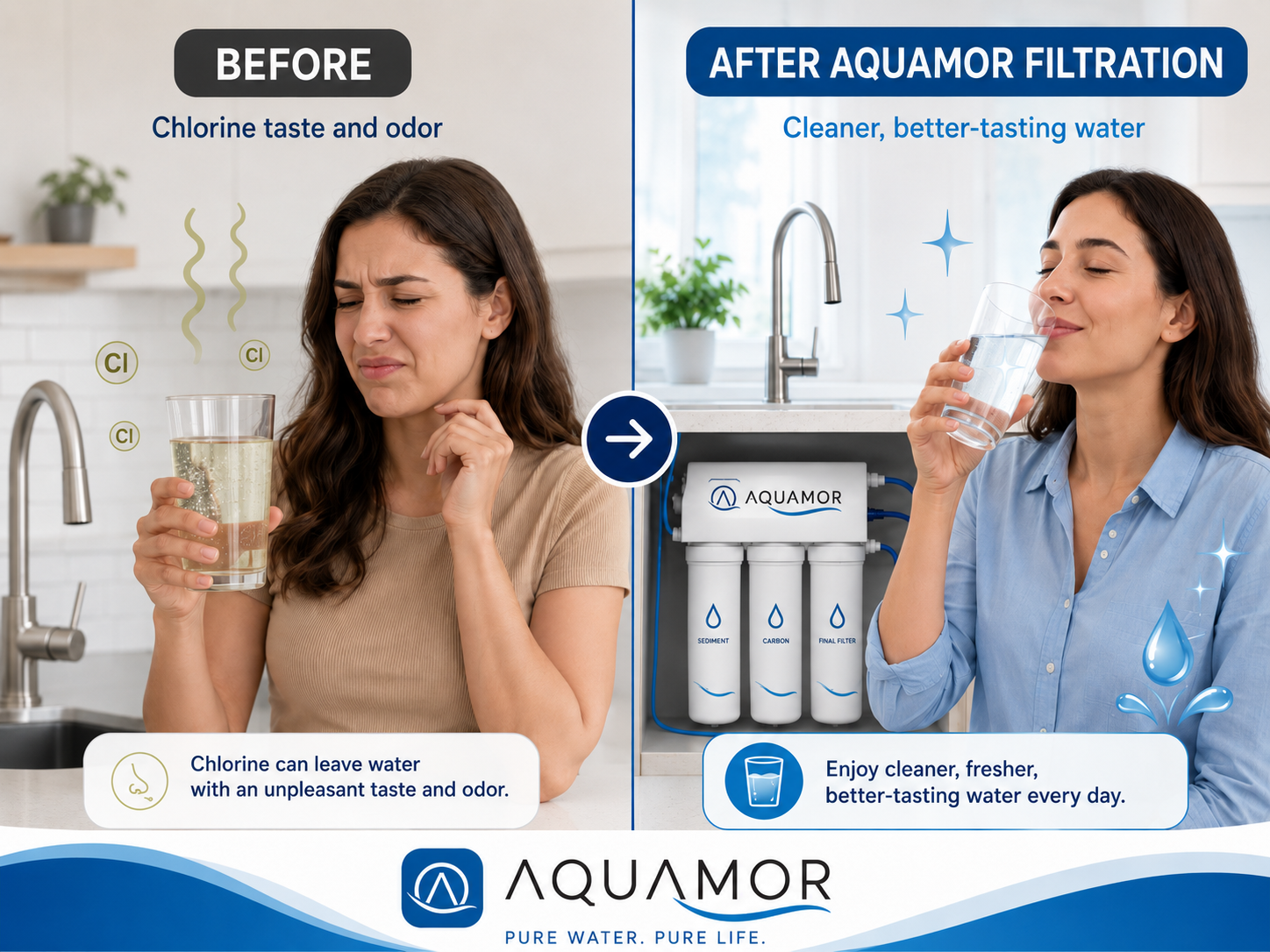
Chlorine plays an important role in public drinking water. Municipal water systems commonly use chlorine or chloramine to help control harmful microorganisms and keep water safer as it travels through distribution pipes. According to the CDC, chlorine is a disinfectant used to kill germs in water, while chloramine is a chlorine-and-ammonia compound also used for disinfection.
But while chlorine helps protect public water supplies, it can also leave behind a noticeable taste or smell. For many people, that taste is described as bleach-like, chemical, sharp, or unpleasant. In homes, restaurants, cafés, offices, manufacturing spaces, and commercial kitchens, chlorine taste in water can affect more than just a glass of drinking water. It can influence beverages, ice, food preparation, customer experience, and even how confident people feel about the water they use every day.
At Aquamor, we believe better water leads to better performance. Our water filtration solutions are designed to help address common water quality concerns, including chlorine taste and odor, across residential, foodservice, commercial, and light industrial applications.
Why Does Water Taste Like Chlorine?
If your tap water tastes or smells like chlorine, it does not automatically mean your water is unsafe. In many cases, it means your water provider has used a disinfectant to help maintain water quality through the distribution system.
The Water Quality Association notes that chlorine residuals are one of the most common odor issues in North American drinking water because treatment systems are often required to maintain a measurable disinfectant residual at the tap.
Several factors can make chlorine taste more noticeable:
- Seasonal water treatment changes
- Distance from the water treatment plant
- Changes in municipal disinfectant levels
- Chloramine use
- Warmer water temperatures
- Plumbing conditions
- Low water usage in a building
- Sensitive taste perception
The result is water that may be technically treated but still unpleasant to drink or use in beverages.
Why Chlorine Taste Matters
Chlorine taste in water is often considered an aesthetic issue, but aesthetics matter. Water that tastes or smells unpleasant can reduce satisfaction, affect product quality, and create unnecessary friction for businesses and consumers.
For homeowners, chlorine taste can make tap water less appealing for drinking, cooking, coffee, tea, ice, and pet bowls. For commercial operations, the impact can be even broader. Restaurants, coffee shops, hotels, convenience stores, offices, and foodservice operators rely on consistent water quality for customer-facing products every day.
When water tastes like chlorine, it can affect:
- Drinking water served to customers
- Coffee and espresso flavor
- Tea clarity and taste
- Fountain beverages
- Ice quality
- Soups, sauces, and prepared foods
- Employee hydration
- Customer perception of cleanliness and quality
That is why solving chlorine taste is not just about making water more pleasant. It is about supporting consistency, performance, and trust.
How Filtration Helps Reduce Chlorine Taste and Odor
Water filters designed for taste and odor improvement often use carbon-based filtration media. Activated carbon is commonly used because it can help reduce chlorine taste and odor as water passes through the filter.
NSF explains that NSF/ANSI 42 applies to filters certified to reduce aesthetic impurities such as chlorine, taste, and odor. When selecting a system, it is important to review the product specifications and reduction claims for the exact filter or system being used.
Aquamor offers filtration solutions for multiple applications, including refrigerator filters, foodservice filtration, reverse osmosis systems, ultrafiltration systems, whole-home filtration, scale reduction, and commercial water treatment. The right solution depends on the water source, the application, flow rate, equipment requirements, and the specific water quality concerns involved.
Aquamor Solutions for Homes and Consumers
For households, chlorine taste in water can show up in everyday routines: filling a glass at the kitchen sink, making coffee, preparing baby formula according to label directions, cooking pasta, brewing tea, or dispensing water from the refrigerator.
Aquamor and WaterSentinel solutions support consumers looking for cleaner, better-tasting water at home. Depending on the application, this may include:
- Refrigerator water filter replacements
- Inline filtration
- Under-sink filtration
- Reverse osmosis systems
- Whole-home filtration solutions
A properly selected filter can help improve taste and odor at the point where water is used most. For many families, that means more enjoyable drinking water, better-tasting ice, and less reliance on bottled water.
Aquamor Solutions for Restaurants and Foodservice
In foodservice, water quality touches nearly everything. A restaurant may use filtered water for drinking water, coffee, tea, fountain drinks, ice machines, steamers, combi ovens, espresso equipment, and food prep.
Chlorine taste can be especially noticeable in beverages. Coffee and tea rely heavily on water chemistry, and even subtle off-flavors can interfere with the final product. Ice can also carry taste and odor into drinks, especially when it melts.
Aquamor provides foodservice water treatment solutions engineered for restaurants, coffee shops, and commercial equipment. Many Aquamor foodservice products include claims for reducing chlorine taste and odor, along with other concerns such as sediment, rust, sand, silt, and scale depending on the model.
For restaurants and beverage programs, the benefits of proper filtration can include:
- Better-tasting drinking water
- More consistent coffee, tea, and fountain beverages
- Improved ice quality
- Reduced unpleasant taste and odor complaints
- Support for commercial equipment performance
- Better consistency across multiple locations
Aquamor Solutions for Coffee Shops and Beverage Programs
Coffee shops, cafés, bakeries, and beverage-focused businesses are especially sensitive to water taste. If the incoming water has a chlorine taste, that flavor can carry into espresso, cold brew, brewed coffee, tea, lemonade, ice, and specialty beverages.
Aquamor filtration can help operators address taste and odor concerns while also selecting systems that match the needs of their equipment. In many beverage environments, filtration may also need to consider sediment and scale reduction, not just chlorine taste.
That makes water filtration an important part of quality control. The goal is not only to make water taste better by itself. It is to help every beverage taste the way it was intended to taste.
Aquamor Solutions for Offices, Hospitality, and Commercial Spaces
Chlorine taste in water can also affect workplaces, hotels, schools, healthcare-adjacent facilities, gyms, and other shared environments. When water tastes unpleasant, people may avoid drinking it or turn to single-use bottled water.
Commercial filtration solutions can help improve the experience at bottle fillers, breakroom sinks, ice machines, coffee stations, and drinking water dispensers. For businesses that want to support employee wellness, guest satisfaction, and operational consistency, better-tasting water is a simple but meaningful improvement.
Choosing the Right Filtration Solution
There is no single water filter that is right for every situation. The best approach depends on the water problem, the application, and the performance requirements.
Before choosing a solution, consider:
- Is the issue mainly chlorine taste and odor?
- Is the water used for drinking, cooking, ice, coffee, tea, or equipment?
- Is the application residential, commercial, or foodservice?
- What flow rate is required?
- Is scale also a concern?
- Does the equipment manufacturer require specific filtration?
- Are sediment, rust, or other particles present?
- Is point-of-use or point-of-entry filtration the better fit?
Aquamor works with a wide range of filtration technologies and product categories, making it easier to match the right solution to the right water challenge.
Better Water Starts with the Right Filter
Chlorine helps keep public water supplies disinfected, but that does not mean consumers or businesses have to accept chlorine taste in water. With the right filtration solution, homes and commercial operations can enjoy water that tastes cleaner, performs better, and supports a more consistent experience.
Whether you are improving drinking water at home, protecting beverage quality in a coffee shop, supporting ice and fountain drinks in a restaurant, or building a commercial water treatment program, Aquamor can help identify filtration solutions designed for real-world performance.
Explore Aquamor’s water filtration solutions at aquamor.com or learn more about Aquamor Foodservice solutions for restaurants, cafés, and commercial equipment.